
Confidence and continuous learning: Key for Chinese students to engage in international standardization work—Interview with Tom Heilandt, Secretary-General of the International Federation for Sustainability and Justice, former Secretary of the Codex Alimentarius Commission
增强自信和不断学习是中国大学生参与国际标准化工作的关键——专访国际可持续性和公正联合会秘书长、国际食品法典委员会前秘书长 汤姆·海伊兰特
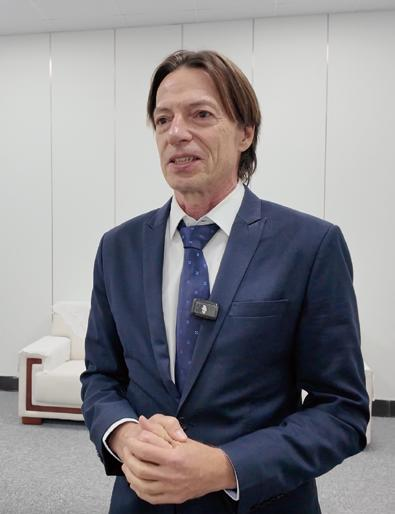
China Standardization: What is your view on this year’s International Standardization Youth Star Competition?
Tom Heilandt: This is the first time I have attended this event, which was founded by my good friend Dr. Zhang Xiaogang, whom I first met in 2016 when he was President of ISO. It is an excellent initiative. I strongly believe that it is essential for young people to become involved in standardization.
Standards are the building blocks of civilization. Without standards, progress would slow dramatically, and each generation would have to reinvent what already exists. At the same time, standards must continuously evolve to respond to new requirements, new thinking, new technologies, and new energy. The competition plays an important role in stimulating young people’s interest in standards.
I have worked in standard setting for more than 30 years and have never lost interest in it. One reason is that standardization demonstrates what people can achieve through cooperation. No one can develop standards alone. Bringing experts together, supporting constructive discussion, and reaching agreement on a final text is both challenging and deeply rewarding.
Three students delivered speeches in English today. How would you assess their performance?
Tom Heilandt: All three students were very well prepared and demonstrated a strong command of English. The student who was selected distinguished herself by telling a story with a strong human dimension, clearly explaining why standardization matters. This approach showed creativity, confidence, and effective communication, which I found particularly impressive.
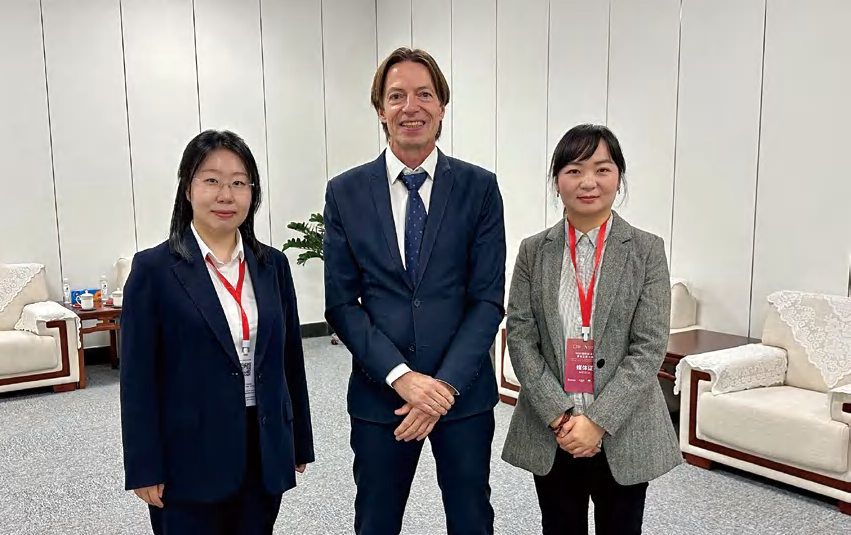
Tom Heilandt with the editorial team of China Standardization magazine
What advice would you give to university students who wish to work in international organizations such as the United Nations? What skills are most important?
Tom Heilandt: First and foremost, language skills are essential. Chinese students already possess a very powerful language—Chinese—but they need at least one additional working language, such as English, French, Spanish, Arabic, or Russian. English remains the main working language in most UN organizations and is therefore indispensable. The higher the level of proficiency is, the better the opportunities are. Knowledge of a third language can further distinguish a candidate.
It is also important to continue learning throughout one’s career. This includes languages, information technology—especially artificial intelligence—as well as personal skills such as presentation, negotiation, and intercultural communication.
Chinese students receive excellent technical education and are known for their strong work ethic. In international meetings, I have sometimes observed that Chinese experts are hesitant to speak. When asked, some explained that they felt it was not polite to speak up. I experienced similar feelings when I was younger and initially found public speaking challenging. Over time, I realized that a discussion is simply a conversation—whether with two people or with one thousand—and I gradually came to enjoy it.
I would also encourage students to take calculated risks when applying for international positions. When I had my first interview with the United Nations, I already had a job I enjoyed in the private sector. I was told that I might need to perform support tasks for several years before taking on independent responsibilities. I replied honestly that this would not be acceptable to me. It was a risk, but it helped clarify expectations and ultimately worked in my favor.
Chinese students should be confident in their abilities. Their education is strong, and there is no reason to step back in international environments. International careers are not for everyone, and opportunities are limited, but this should not discourage those who genuinely wish to contribute to global cooperation and to making the world a better place.
About Tom Heilandt:
Tom Heilandt is a senior international expert in food safety and standardization, with more than 30 years of experience in the development, governance, and implementation of international standards. From 2014 to 2023, he served as Secretary of the FAO/WHO Codex Alimentarius Commission, the principal international body responsible for food standards, guidelines, and codes of practice. In this role, he supported consensus-based decision-making among more than 180 member countries, including China, and observer organizations from government, industry, and academia.
Mr. Heilandt has longstanding experience in supporting China’s engagement in international standardization. He has worked closely with Chinese competent authorities, scientific institutions, and experts to facilitate effective participation in international standard-setting processes and to promote consistency between national systems and international food safety standards. He has also contributed to advisory activities related to food safety risk assessment and science-based regulatory cooperation.
Earlier in his career, Mr. Heilandt held senior positions at the United Nations Economic Commission for Europe (UNECE), where he was responsible for international agricultural quality standards, and at FAO in Geneva, where he led engagement with private sector stakeholders. In addition to serving as Secretary General of the International Federation for Sustainability and Justice, a newly established Vienna based think tank, he currently advises international organizations, industry platforms, and policy initiatives on food safety, sustainability, and standards governance, working from Hong Kong and Europe.
In 2024, he received the Chinese Government Friendship Award in recognition of his contribution to China–international cooperation in food safety and standardization.
