
Sewage treatment is one of the significant sources of greenhouse gas emissions, and it is also an important area for energy conservation, consumption reduction, as well as resource and energy recovery, demonstrating great potential for carbon reduction.
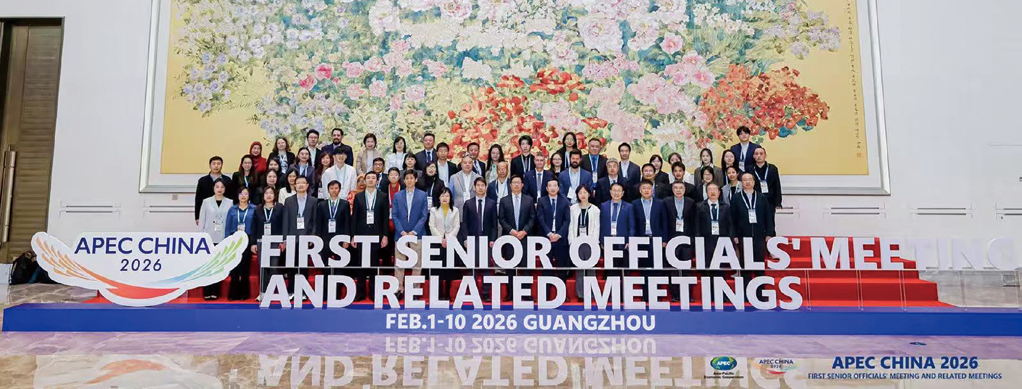
The meeting on carbon emission management standards and best practices for urban sewage treatment was held in Guangzhou on February 3, during the First Senior Officials’ Meeting and Related Meetings of APEC China 2026.
The meeting was hosted by CNIS, and jointly organized by the School of Environment of Tsinghua University and Oceanpower Corporation. It was attended by approximately 50 representatives from economies such as Australia, Canada, China, Hong Kong Special Administrative Region of China, Indonesia, Peru, the Philippines, Singapore, Thailand, the U.S. and Vietnam, as well as non-governmental organizations.
The event was addressed by Zhu Zhongliang, Deputy Director-General of the Department of International Cooperation of SAMR, Li Zhiping, Vice President of CNIS, and Li Pengcheng, President of the Sub-Committee on Standards and Conformance of APEC. Reports were made by representatives from international organizations, including ISO Central Secretariat, and ISO/TC 282 on water reuse, as well as renowned universities and enterprises, including Tsinghua University, City University of Hong Kong, Princeton University, and the University of Queensland.
The attendees had in-depth discussions on the academic research progress, practical experience and prospects of international standardization in terms of carbon emission management and carbon reduction for urban sewage treatment. The meeting reached consensus on key issues of carbon emission management and carbon reduction for urban sewage treatment, such as the core concepts, technical upgrade paths, and international standardization promotion directions.
The meeting is of great significance for strengthening cooperation and exchanges in carbon emission management of regional wastewater treatment and promoting standardized practices in this field.
