
Trade development and standards cooperation in the digital and intelligent era: Insights from Professor Kichan Kim
数字化、智能化时代的贸易发展与标准合作
By Jack Yao
文/姚歆

In the digital and intelligent era, the synergy between trade development and standards cooperation is no longer a choice but an essential for micro, small and medium-sized enterprises (MSMEs) to integrate into global trade. Based on a series of keynote speeches delivered by Professor Kichan Kim, Chair of the Organization for Trade Development and Standards Cooperation (ODCCN) and the International Council for Small Business (ICSB), this article explores the “Chain of Trust” that connects quality, standards, conformity assessment, and mutual recognition.
1. The importance of synergy between trade and standards
In today’s global economy, trade development and standards cooperation must move in tandem to make cross-border transactions more rapid, more reliable, and more inclusive. As the digital transformation accelerates, rules and standards are increasing, posing a risk of marginalizing MSMEs.
Professor Kim delivered eight keynote speeches in China in 2025. This article summarizes his opinions in the speeches. He identifies a critical operational chain: Trade → Standards → Evidence → Mutual recognition. This sequence reflects the institutional pathway through which trust is established in international trade: standards define common requirements, evidence provides verifiable proof that those requirements are met, and mutual recognition enables that proof to be accepted across borders. In practice, such evidence is generated through conformity assessment processes, which convert compliance with standards into verifiable results such as test reports, certifications, or audit findings.
If the digital-intelligent era is a highway, standards act as the “traffic rules” for the highway, conformity assessment serves as the “inspection and insurance”, and recognition mechanisms function as the “passes of mutual recognition”.
When these elements are coordinated, businesses benefit from lower communication costs, accelerated market access, and fairer opportunities based on verifiable capabilities rather than mere relationships.
- Lower communication cost: the shared vocabulary means fewer explanations and disputes.
- Faster market access: once verifiable credentials and recognition rules are embedded into systems, review shifts from “manual queues” to “system checks + risk-based sampling”.
- Fairer opportunities: with transparent rules and clear proof paths, MSMEs can participate based on verifiable capabilities without repeatedly explaining the evidential relationships.
Together, these benefits turn “standards cooperation” from an abstract idea into a practical lever for trade growth: quicker transactions, more stable delivery, and broader participation.
2. Six dimensions of a unified chain of trust
Professor Kim’s eight keynote speeches in 2025 outline a comprehensive framework for transforming requirements into verifiable results:
1) Inclusivity (global trade and investment promotion). How can we make growth remain inclusive? The direction is clear: digitalization is reshaping the distribution of trade opportunities. Standards cooperation should lower entry barriers so that MSMEs can not only use standards but also co-create rules rather than being filtered out by platform compliance.
2) Operational trust (conformity assessment). How can trust become operational? If standards remain “text”, parties still need extensive reassurance. Conformity assessment converts standards into evidence—turning promises into verifiable results. Digital verification (e-certificates, online verification interfaces) shifts processes from “submitting documents” to “instant validation”.
3) Scalable services (services trade). How do services get accepted? Services are less visible than goods; value is created during delivery. Standardizing delivery processes and competencies creates the “verifiable process evidence” necessary for intangible trade.
4) Foundational quality (quality governance). Quality is the foundation of trust. It goes beyond measurement; it is about governance capability. Standards make excellence replicable, conformity assessment makes it provable.
5) Predictability (commercial legal services). Law provides the rights-and-obligations framework; standards translate the framework into operable workflows. As cross-border cooperation becomes more complex, reusable “public tools” for dispute prevention, model clauses, and compliance workflows reduce uncertainty.
6) Project-based coordination (trade development and standards cooperation). Standards cooperation should not stay at the level of slogans; it must be implemented through concrete projects. That means aligning key terms and a minimum dataset around real industry pain points, and moving mutual recognition into procurement, platform onboarding, and supply-chain coordination—reducing repetitive compliance.
Together, these themes form six operational dimensions that support the functioning of the trust chain between trade, standards, evidence, and mutual recognition. Coordination is not about “adding standards onto trade”. It is about organizing standards, assessment, and mutual recognition into a unified chain of trust, so that more stakeholders can participate in international cooperation at lower cost.
Apart from the summit in May, Professor Kim made six speeches in September and another speech in December. For many firms, “closing compliance and access before Q4” directly affects the next year’s orders and partnerships. That is why the September agendas focused on how to prepare evidence, how to reduce review burdens, how to embed mutual recognition into systems, and how to lower legal uncertainty.
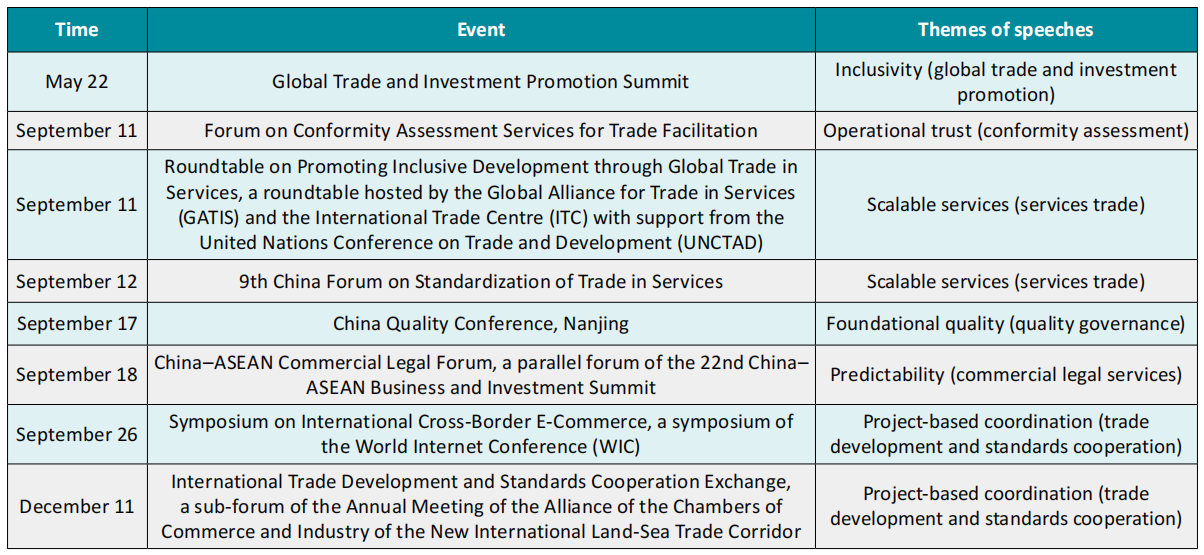
Figure 1: The eight speeches and their themes delivered by Professor Kim in 2025
3. The trust loop: quality – standards – conformity assessment – recognition
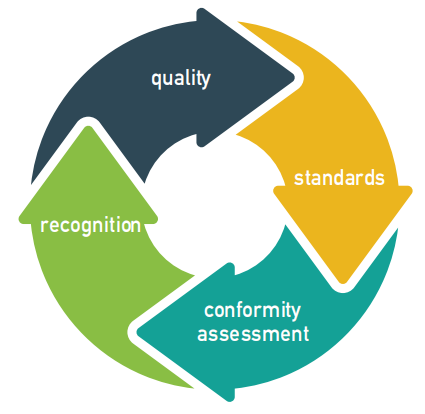
These four keywords form a closed-loop mechanism that assesses compliance:
Quality is the foundation of trust. In the digital era, quality goes beyond product pass rates. It includes delivery stability, process control, data accuracy, and traceability. Many new requirements—data compliance, sustainability disclosure—effectively address the question: can you do things right, consistently, and can you always prove it?
Standards are the universal language. They align “key joints”—definitions, evidence formats, and validity periods—to ensure system interfaces match.
Conformity assessment is the converter. In trade, “I comply” is not merely a statement; it is a set of verifiable facts (test reports, audit conclusions, process records, and ongoing monitoring) that buyers, platforms, and financiers can rely on.
Recognition is the multiplier. This “last mile” allows one investment in compliance to be reused across multiple scenarios, acting as a “passport” for global trade.
This loop becomes clearer in real trade:
- Cross-border e-commerce: initial barriers arise from platform onboarding and advertising compliance. Standards translate requirements (information security, consumer protection, product claims) into checklists; conformity assessment produces verifiable credentials; recognition integrates these credentials with platform review systems, reducing repeated submissions and manual intervention.
- Cross-border service outsourcing: buyers face risks from uncontrolled processes, including delays, personnel changes, and data breaches. Service standards define control points (delivery workflow, access control, incident response); assessment verifies their operation; recognition allows the same evidence to be reused for renewals and scaling.
- Sustainable supply chains: inconsistent data formats are a common challenge, as the same carbon or due-diligence data may be requested in different templates. Coordination should focus on a minimum dataset and standardized evidence formats, enabling one dataset to be accepted across multiple contexts.
Two enabling factors ensure the trust loop functions effectively: explainability (conclusions must be traceable to their basis) and traceability (key records must allow process reconstruction). Without these, recognition remains limited. Therefore, clauses, assessment rules, digital verification methods, and correction mechanisms should be designed as an integrated framework.
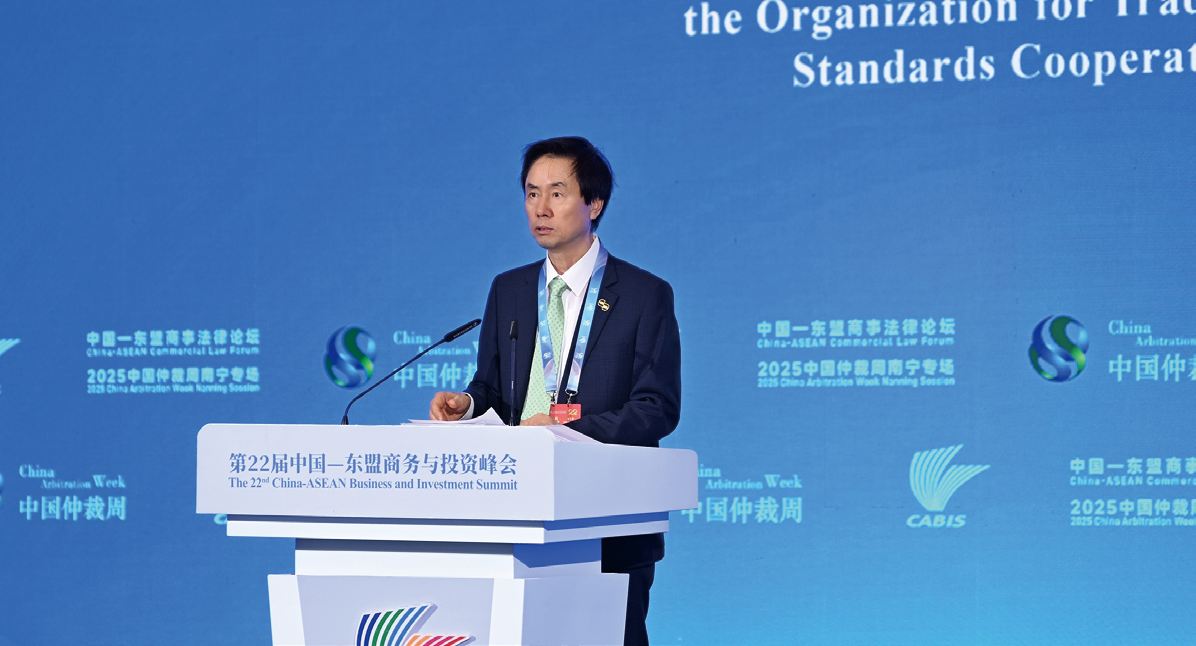
Professor Kichan Kim, Chair of ODCCN and ICSB
4. Ten strategic takeaways for the global market
The following ten statements from the speeches are the most important.
1) Trade frictions are shifting from borders to rules, data, and trust; “institutional costs” increasingly determine competitiveness.
2) Quality is the basis of trust; quality governance must extend to processes and data.
3) The goal of standards is to reduce mismatch costs, not create paperwork.
4) Conformity assessment turns standards into evidence; without evidence, standards cannot be used by transaction systems.
5) The efficacy of coordination should be measured by the scope of recognition rather than the sheer number of certificates. Success lies in the seamless integration of evidence into real-world transaction scenarios.
6) Scalable services trade requires verifiable process evidence for delivery, competencies, and continuous improvement.
7) The more complex cross-border cooperation becomes, the more we need law and standardized workflows to improve transparency and predictability.
8) Sustainability requirements are expanding; the key is not to raise barriers but to reduce duplication—align definitions, minimum datasets, toolkits, and cost sharing.
9) For new business models, agile pilot projects matter more than waiting for “perfectly mature standards”: make it usable first, then iterate.
10) MSMEs must be considered in the design of coordination mechanisms: accessibility, affordability, and evidence reusability decide whether coordination succeeds.
If you want to turn these takeaways into actions, three priorities usually work best: align high-frequency fields and documentation first (less repeated reporting); strengthen evidence for high-risk control points next (higher pass rates); then scale cross-scenario reuse so one investment yields sustained returns.
5. Conclusion: Reducing friction, widening recognition
The synergy between trade development and standards cooperation is about connecting “doing well” with “being accepted”. In the digital and intelligent era, the connection pathway is increasingly clear: align with standards, pass conformity assessment, reduce friction through digital verification, and scale value through recognition mechanisms.
The practical value of this approach is that it turns abstract institutional change into workable collaboration pathways.
In a world where “invisible frictions” are becoming normal, the impact of coordination will be reflected in simple indicators: reduced review cycles, streamlined reporting, increased evidence reuse, lower MSME entry barriers, and higher compliance success rates. The goal is not to make standards look “more sophisticated sustainable—while enabling broader participation.
Ultimately, ODCCN and ICSB aim to embed these coordination mechanisms into daily transaction flows, ensuring that as rules increase, the barriers for MSMEs decrease.
About ICSB:
ICSB is an initiating organization behind the United Nations’ MSME Day and has long promoted innovation, entrepreneurship, and sustainable development for MSMEs.
About ODCCN:
ODCCN is a Category A liaison organization to the International Organization for Standardization (ISO), a partner of the World Trade Organization (WTO) Informal Working Group on MSMEs, and a partner of the African Regional Organization for Standardization (ARSO). Through these linkages, ODCCN helps connect standards, conformity assessment, and capacity-building across regions.
About the author:

Jack Yao serves as Secretary-General of ODCCN and Chairperson of ISO/TC 342, Management consultancy. He plays an active leadership role in advancing international consensus-building and the development of globally applicable standards. In recognition of his sustained contributions to international standardization, he received the ISO Excellence Award twice (2023, 2024). He was also honored as the “Standardization Figure of the Year” by China Standardization Press (2019, 2021, 2022, 2023, 2024).
