
From technological innovation to development impact, standards are the key to inclusive, sustainable growth
标准是实现包容性、可持续增长的关键
By ISO Secretary-General Sergio Mujica
文/国际标准化组织秘书长 塞尔吉奥·穆希卡
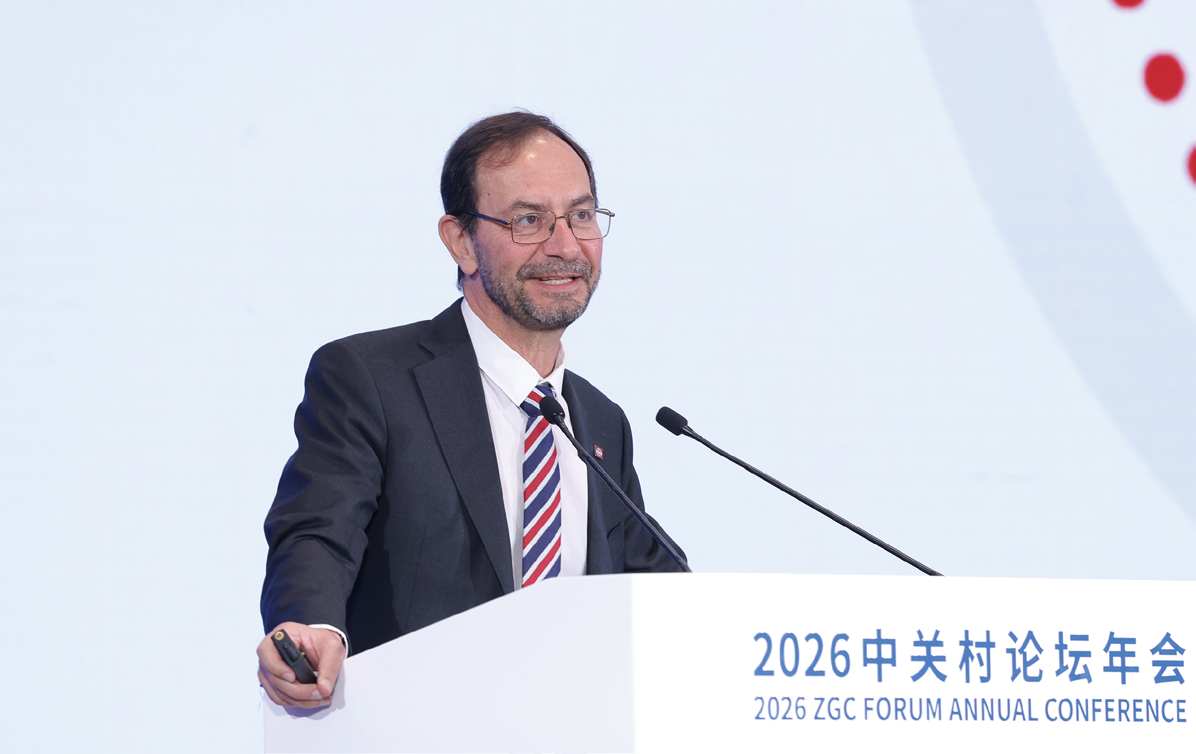
Photo: Beijing Municipal Administration for Market Regulation
Editor’s note:
In March, ISO Secretary-General Sergio Mujica was invited to Beijing as a special guest at the 2026 ZGC Forum Annual Conference. He delivered a speech at the Standardization and Science & Technological Innovation Development Forum. During his visit to China, Mr. Mujica toured the State Administration for Market Regulation (SAMR), the National Standardization Administration of China (SAC), and the China National Institute of Standardization (CNIS). China Standardization Press invited him to share his impressions of the Forum, his productive trip, the role of ISO international standards in driving innovation, and his insights on China’s future development pathway.
In a rapidly evolving digital world, fuelling innovation across the twin pillars of technology and industry is essential to foster sustainable, inclusive growth. This was the clear takeaway from my recent trip to the Zhongguancun (ZGC) Forum in Beijing, where I joined top scientists, leading entrepreneurs and heads of international organizations to explore the integration of innovation across these sectors.
The Forum is a dynamic platform for exchange and collaboration between changemakers who recognize the event’s central role in steering the global agenda on innovation. As a leading center of scientific and technological excellence, Beijing served as a particularly fitting host city—a place where world-class talent, forward-looking policies and an innovative mindset are creating international impact.
Chinese President Xi Jinping himself has publicly acknowledged the Forum’s significance, calling for China to join hands with the world to promote innovation and ensure science and technology better serve humanity.
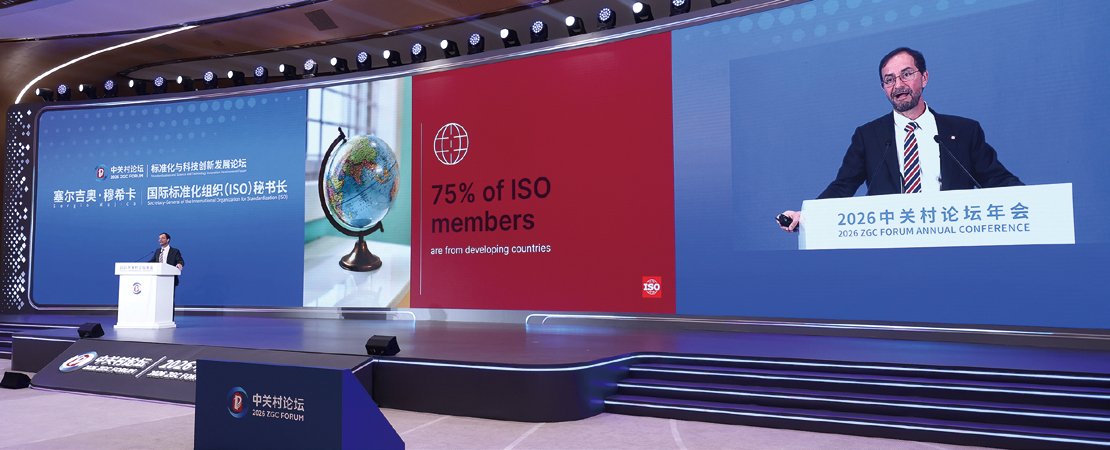
Photo: Beijing Municipal Administration for Market Regulation
Opening the doors to innovation
During the Forum’s opening ceremony, I had the opportunity to highlight how standards are key levers in driving this process. In an era of geopolitical uncertainty and fragmentation, International Standards provide the common language that builds trust and security, enabling innovation to flourish. They serve as a crucial bridge between technological advances and industrial development.
International Standards are shaping the future of the digital age. Together with our close partner the International Electrotechnical Commission (IEC), ISO develops standards that support artificial intelligence (AI) governance, providing a toolkit for how to develop, deploy and scale AI technology responsibly. From blockchain and bio-digital convergence to quantum technologies and the Internet of Things, our organizations are committed to ensuring that emerging technologies don’t deepen the digital pide but benefit the whole of society.
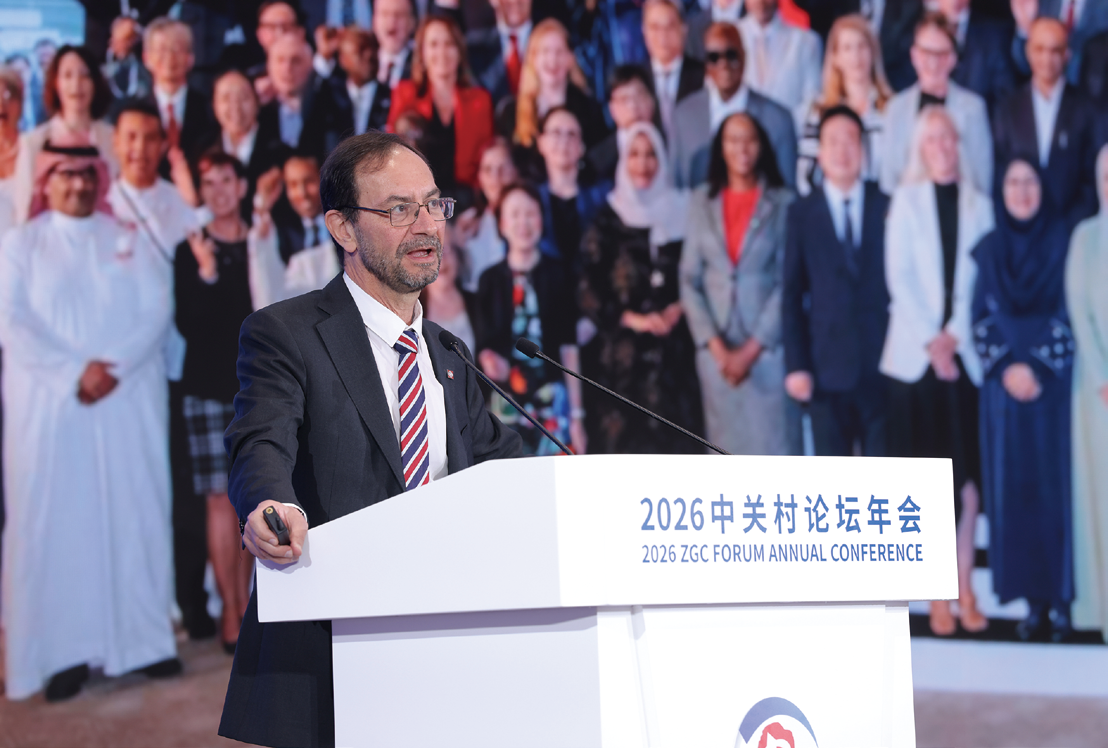
Sergio Mujica delivers a speech at the Standardization and Science & Technological Innovation Development Forum in Beijing, China in March. (Photo: Beijing Municipal Administration for Market Regulation)
Standards drive development
In Beijing, I also attended the Standardization and Science and Technology Innovation Development Forum. It was a chance to present on how standards function as critical drivers of sustainable, inclusive development. This message is emphasized in the World Bank’s flagship World Development Report 2025—the first of its kind to be devoted entirely to standards.
The Report shines a light on the silent power of International Standards to enable trade, safety, quality and interoperability across borders and sectors. Standards, it argues, provide the hidden foundations of prosperity and are instrumental in shaping modern development pathways.
In practical terms, this means that countries which integrate standards into their national development strategies stand to gain access to global markets, attract investment, strengthen productivity and build resilient industries. Thanks to their versatility, standards can be adapted, aligned or even created by countries to meet their unique economic needs.
Building capacity to boost participation
As the World Bank Report emphasizes, the potential of standards to drive development in low- and middle-income countries remains largely untapped due to economic and institutional barriers. While these countries may face access issues, the deeper challenge lies in their ability to participate meaningfully in the development of standards.
To address this, ISO is focused on empowering these countries through our Action Plan for Developing Countries (APDC), which aims to bridge the gap in capacity and enhance their participation in global standardization efforts, while increasing the uptake of International Standards.
In recognizing that strong national standards bodies are essential to achieve our vision, the Action Plan complements the ISO Strategy 2030 and accelerates progress towards the United Nations Sustainable Development Goals (SDGs).
Why this matters for ISO goes beyond mere altruism. Empowering experts from developing countries to participate more effectively and equitably in standardization ensures the global relevance of our standards. In addition, because participation promotes the uptake and implementation of standards, it helps achieve ISO’s strategic goal of standards used everywhere.

Sergio Mujica visits the National Standards Library at the China National Institute of Standardization (CNIS) during his trip to China. (Photo: CNIS)
China’s development pathway
China’s remarkable socioeconomic development is a testament to the power of standards in driving national growth. As a world leader in technological and industrial innovation, it relies heavily on standards to build trust, ensure safety and scale solutions, accelerating the country’s ambitious development policies.
Through its ISO member, SAC, China makes a huge contribution to international standardization, showing leadership and vision in heading around 90 ISO technical committees. The input of Chinese experts and stakeholders from across sectors helps ISO standards meet market needs and reflect perse user experiences.
By continuing to invest in national quality infrastructure and encouraging broader participation in standards development, China can ensure its national priorities are reflected globally—helping to write the rules that shape economies and offer a pathway to a more inclusive, sustainable future.
China’s journey exemplifies how, by embracing standards, countries can build resilient economies, foster innovation and lead the way toward a more interconnected, equitable world. As we continue to shape society through the collaborative power of International Standards, we are not only building a better today, but paving the way for a future in which technology and sustainable development work for everyone, everywhere.
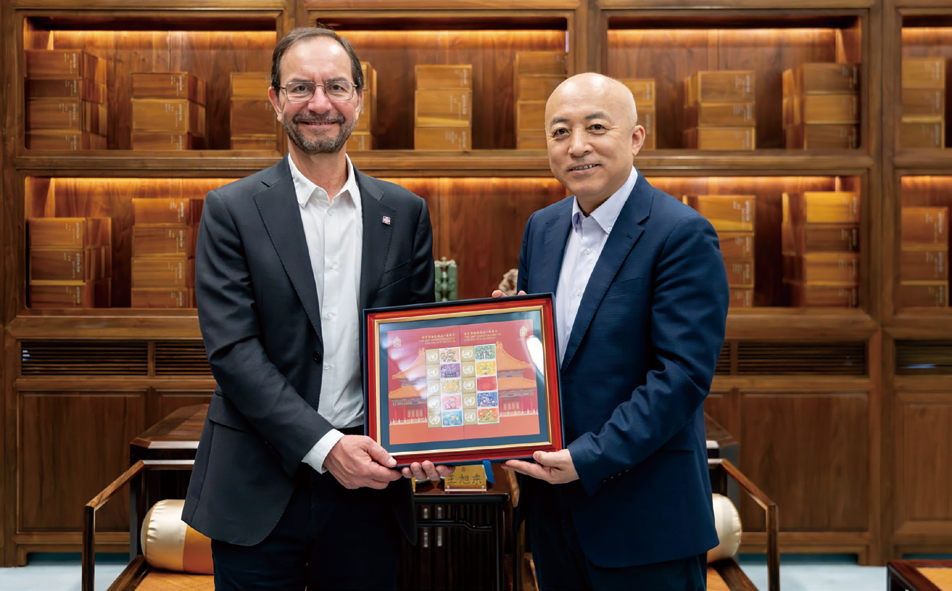
Sergio Mujica meets with Wang Xudong, Director of the Palace Museum and visits the secretariat of ISO/TC 349 on cultural heritage conservation at the Palace Museum in Beijing. (Photo: CNIS)
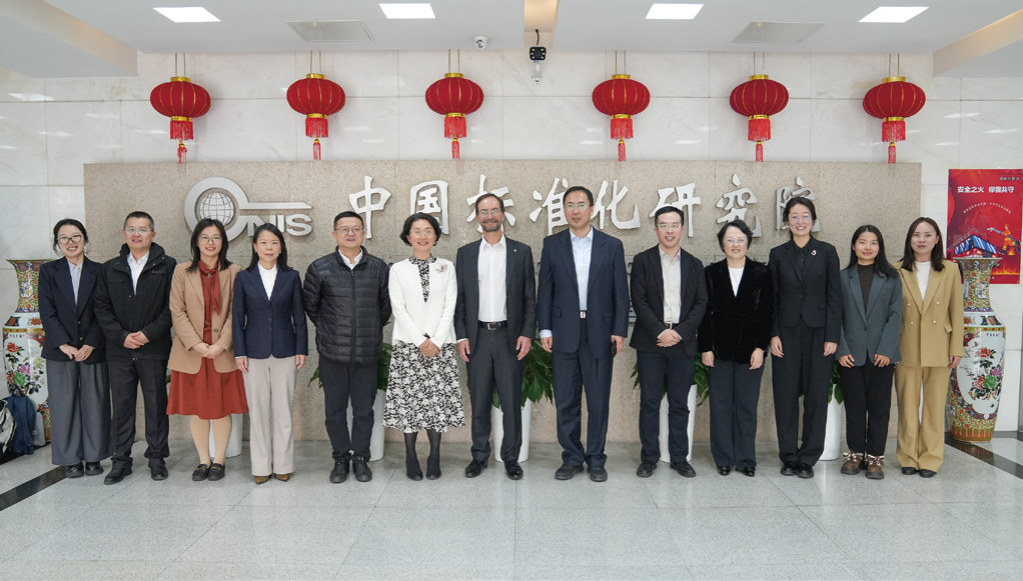
Photo: CNIS Sergio Mujica (L7), Deputy Director-General of Standards Innovative Management Department of SAMR Sun Wei (L6), CNIS President Wang Kun (L8), CNIS Vice President Chen Weiliang (L5), along with staff from SAMR, SAC and CNIS. (Photo: CNIS)
About Sergio Mujica:
Sergio Mujica has been ISO Secretary-General since 2017.
ISO is a leading international organization in standardization with a membership of about 177 national standards bodies. ISO standards support global trade, drive inclusive and equitable economic growth, advance innovation and promote health and safety to achieve a sustainable future.
Under Sergio’s leadership, ISO approved a new Strategy 2030, which is aligned with the UN Sustainable Development Goals, with a vision of “making lives easier, safer and better.”
